
Find Auburn Residents
A useful Auburn residents directory search starts with the clue in hand. A street address points first to the city parcel map and Lee County tax roll. A full name may fit a property owner, court party, business officer, licensed professional, or person in a historical source. An older address belongs in deeds, maps, newspapers, census schedules, and city directories. Each source answers a narrow question. None proves every person who shares a home.
Work from broad clues toward records with stronger identity detail. Keep address types separate. A situs address is the parcel itself, while an owner mailing address receives tax mail. A court filing address belongs to one point in time. A business address shows an affiliation. Matching two records is safer than treating one name and city as a complete identity.
- Search the Lee County property roll or Auburn parcel layer by the known name, address, street, or subdivision.
- Record the parcel number, situs, owner mailing locality, deed date, deed book and page, and prior owner when shown.
- Use exact identifying facts for voter or court checks. Compare middle initials, dates, roles, and case numbers.
- For an older trail, pair deeds with the relevant directory, census, newspaper, map, or cemetery entry.
- When no index is online, ask the custodian for a narrow index search, viewing appointment, or copy.
Auburn Records Custodians
Auburn searches cross three levels of government. The city keeps municipal records, maps, permits, police material, and municipal court files. Lee County keeps deeds, probate matters, property assessments, taxes, and state trial-court files. Alabama agencies handle voter verification, vital certificates, statewide business records, archives, and some justice databases. Many county counters are in Opelika because Auburn is not the county seat. The full address-by-address method belongs in the Auburn street directory.
Lee County Probate Recording
215 S. 9th Street
Opelika, AL 36801
(334) 737-3670
Lee County Revenue Commissioner
215 S. 9th Street
Opelika, AL 36801
(334) 737-3655
City of Auburn Records
144 Tichenor Avenue, Suite 1
Auburn, AL 36830
(334) 501-7260
Office hours and release rules differ. The Probate Recording Division publishes weekday hours of 8 a.m. to 4:30 p.m.; Revenue publishes 8:30 a.m. to 4:30 p.m. The city request form accepts email, mail, or in-person delivery. Call before travel when a file may be archived or confidential.
Auburn Has No Single Roll
The phrase Auburn residents directory sounds like one master list, but the evidence is split by purpose. Parcel files name owners, not all occupants. Voter verification concerns one registrant and needs exact inputs. Deeds identify parties to a land transfer. Court dockets show parties and events in a case. Vital records have their own eligibility rules. City staff pages list public roles, not private households.
This split matters in a university city. Student turnover and multifamily parcels make owner and occupant especially easy to confuse. An entity may own a building while dozens of people live there. Conversely, an owner mailing address may be outside Auburn while the situs remains in the city. A sound directory search labels each clue by source and date instead of merging them into one household claim.
- Roll
- A list kept for one public task, such as taxation or voter administration.
- Index
- A finding aid that points to a document; it may not display the document image.
- Parcel
- A mapped unit of land tied to an assessment key and legal description.
- Criss-cross directory
- A printed directory arranged by street or phone number rather than only by surname.
Read Auburn Property Clues
The Lee County property search is the fastest current ownership lead, while Auburn's parcel service supplies a rich set of map fields. It can show owner and prior owner, mailing lines, situs street, parcel and PIN, deed date, deed book and page, subdivision and lot, acreage, values, tax, and a homestead code. County attributes in the city layer update quarterly, so a recent sale may not appear at once.
Open the Lee County property and tax search before relying on a mapped result.
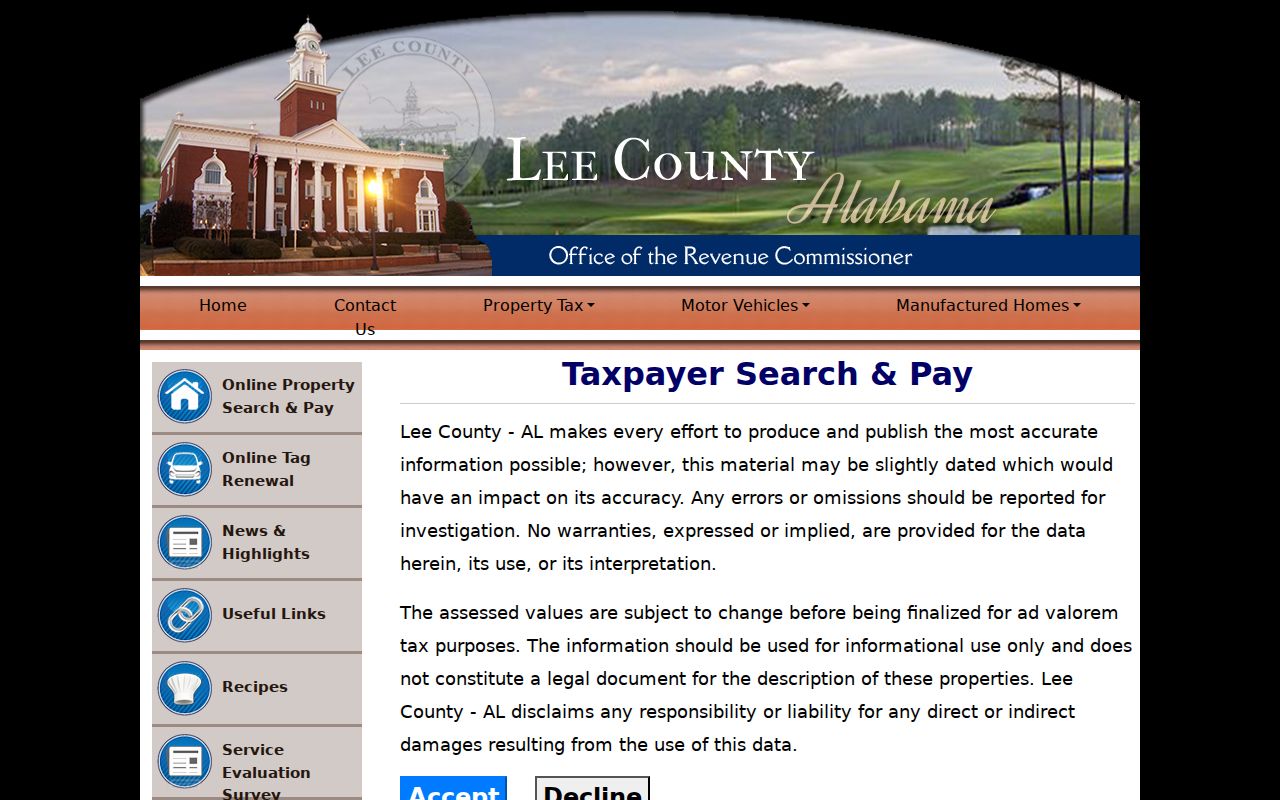
The official entry is a starting point for owner and tax evidence. It does not supply a tenant list or prove who sleeps at the address.
| Field group | What it helps establish |
|---|---|
| Owner and prior owner | Names linked to the assessed parcel at different points. |
| Mailing and situs | Where tax mail goes versus the physical property location. |
| Deed date, book, page | The bridge from the parcel to a recorded instrument. |
| Subdivision, lot, acreage | Legal and map context that can survive a street-name change. |
| Last changed and date added | Clues about data timing, not proof of a transfer date. |
Lee Probate Links Auburn Owners
A parcel's deed reference is the bridge to Lee County Probate. No public web grantor-grantee index was verified. The Recording Division instead documents public viewing stations, staff help with a name search, and copies requested in person or by mail. A mail request works best when it gives the book, page, and recording date. Copies cost $1 per page, with $3 added to certify a document.
The Lee County recording access page shows the offline route used by the Auburn residents directory.
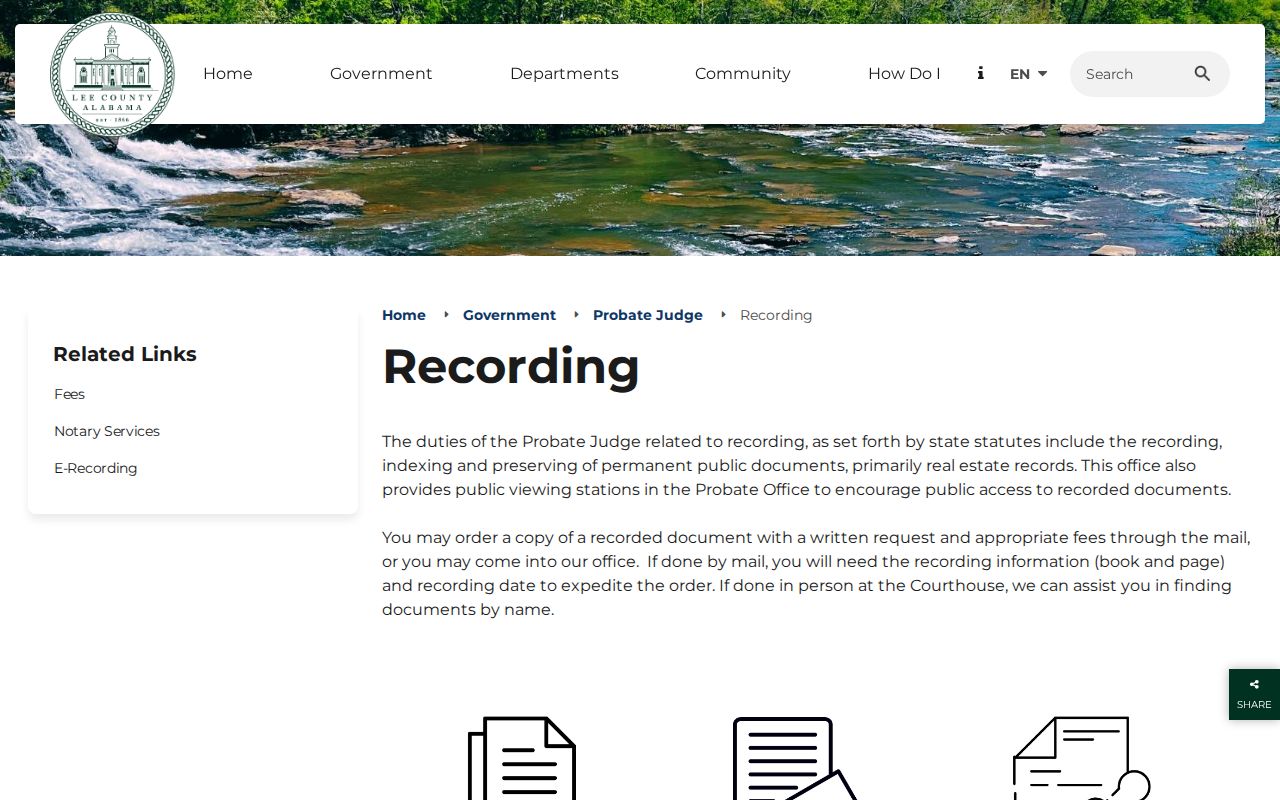
This office route is vital when a portal stops at book and page. A deed can reveal grantor, grantee, legal description, dates, and references to earlier instruments.
Note: Ask for an index or register first when the target instrument is unknown, then order only the pages that matter.
Auburn Voter Lookup Limits
Alabama's My Voter Page verifies one person through first name, last name, full date of birth, and a reCAPTCHA. A match may show registration status, ballot status, polling location, and its address. The tool is not a street browser. It cannot display everyone registered on an Auburn block. Alabama also does not register voters by party.
The statutory voter list is a different product requested from the Secretary of State. Its form can specify county, city, district, status, and selected fields, with a quote issued before payment. Effective June 1, 2026, Alabama tightened rules for voter-list sale, publication, and commercial use. Protected officials and spouses may also file an affirmation that leaves only their name on public lists. These limits make voter evidence a controlled verification source, not an open Auburn residents directory.
Auburn Civic Info offers a safer address-first way to confirm public geography without turning voter data into a household list. An address or map point can return the voting ward, polling station, school zone, fire response zone, and sanitation day. Those facts can explain why two nearby Auburn addresses vote or receive services in different places. They still identify a district, not the people inside a home. When a voter record is needed, use the individual verification route or a lawful, scoped request and follow the current statutory limits.
| My Voter Page input | Form rule |
|---|---|
| First Name | Required exact personal input. |
| Last Name | Required exact personal input. |
| Date of Birth | Full month, day, and year required. |
| reCAPTCHA | Required browser challenge. |
Current Auburn Resident Sources
Current Auburn directory work is a comparison task. Choose a source for the fact sought, then use another source to guard against a same-name error. Property, voter, deed, court, business, and license records each show a different public relationship. Commercial compilations may combine old material without making those distinctions clear.
| Auburn source | People or roles shown | Custodian | Access path |
|---|---|---|---|
| Property and tax roll | Parcel owners and mailing contacts | Lee Revenue Commissioner | Free web entry and office |
| Recorded instruments | Grantors, grantees, and other indexed parties | Lee County Probate | Viewing station, staff help, mail copy |
| Voter verification | One registrant with exact inputs | Alabama Secretary of State | Free individual portal |
| Trial court files | Case parties, roles, events, and disposition | Lee Circuit Clerk | Counter, copy form, paid portal |
| City files | Named parties in releasable permits and records | City of Auburn | Email, mail, or in-person request |
No verified citywide neighborhood-association member roster was found. Association contacts and community archives may give lawful public leads, but private membership should not be inferred.
Compare Auburn Search Routes
Official sources are narrower but easier to interpret. A tax roll is authoritative for the current assessment record. A clerk's case file comes from the court that handled it. A certificate comes from the vital-record custodian. Commercial people-finder products can be quick, yet their match rules, dates, and correction paths vary. They should be treated as leads, never as official proof.
| Route | Strength | Main limit |
|---|---|---|
| Official online index | Named custodian and defined record purpose | May expose only an index or current data |
| Custodian counter or request | Can reach files not placed online | May require precise identifiers, time, and copy fees |
| Library or archives | Strong context for old residents and changed names | Holdings may be partial and need in-person research |
| Commercial compilation | Broad lead gathering | Freshness and identity matching are uncertain |
A removal request to a commercial compilation does not erase the underlying deed, docket, or tax record. Corrections and lawful restrictions must be taken to the agency that keeps the source.
Auburn Vital Record Boundaries
Alabama vital access is uneven by design. Statewide birth and death records begin in 1908. Birth certificates stay restricted for 125 years, and death certificates for 25 years. Marriage certificates from August 1936 forward and divorce certificates from 1950 forward are unrestricted when the requester supplies enough facts and the fee. The ADPH divorce certificate is an abstract; the decree and case file remain with the Lee Circuit Clerk.
The Alabama vital records service sets out certificate types, ordering routes, and eligibility.

Orders may go by mail or through any Alabama county health department. The $15 search includes one certified copy or a failure-to-find statement, and another copy of the same record is $6.
Historical gaps call for a different chain: Lee Probate for earlier marriage material, Lee Circuit Court for earlier divorce files, and state archives, church registers, newspapers, or cemetery evidence when civil registration does not reach the date.
Auburn Court Search Choices
Auburn Municipal Court handles city ordinance matters, traffic offenses, and adopted state misdemeanors. Broader civil, criminal, domestic-relations, and traffic files sit with Lee County Circuit and District Courts. Federal matters for Lee County belong to the Middle District of Alabama. Searching the wrong court can look like a no-result even when a file exists elsewhere.
Alabama's Just One Look trial-court portal offers paid name and case-number searches.
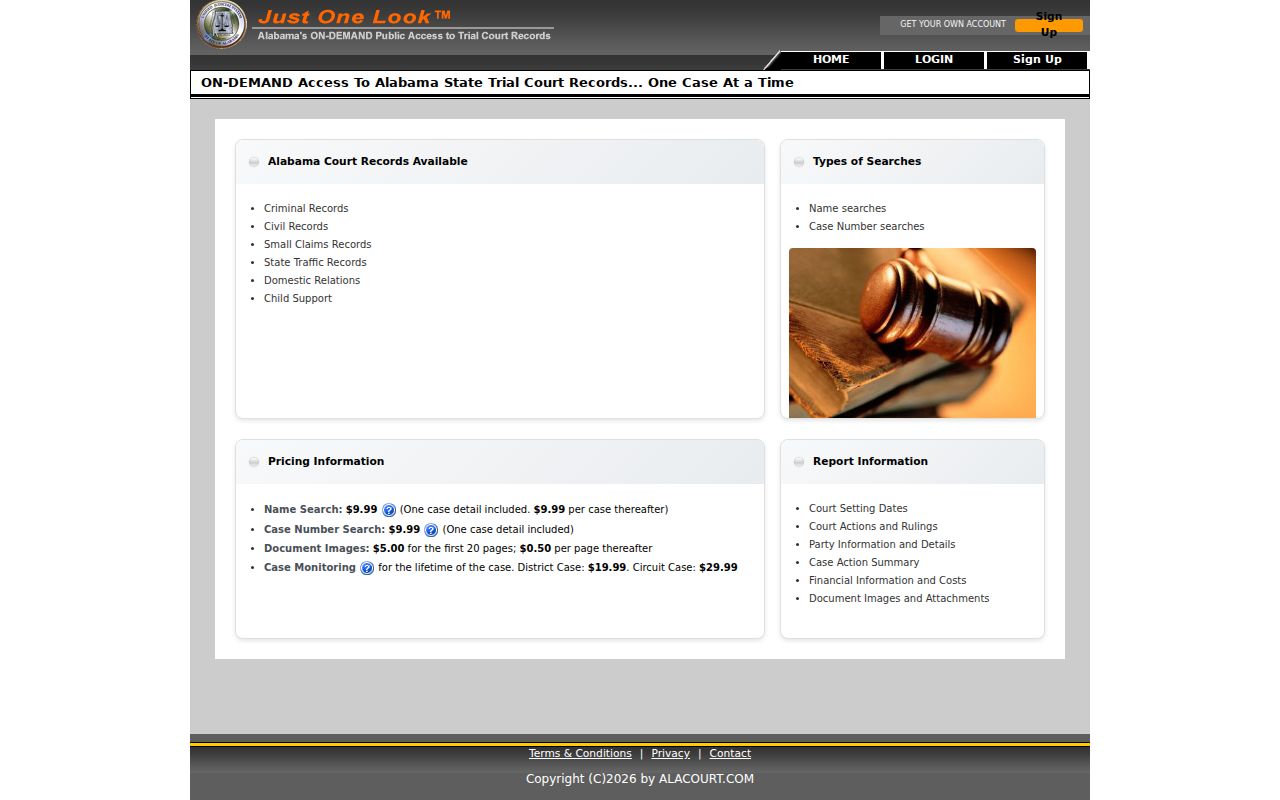
A remote search costs $9.99 even when no match is found. It includes one matching case detail, while further details and images cost more. Electronic docket and document viewing at the clerk office is available without that remote search fee during business hours, though copies are charged.
Compare case number, court, party role, type, filing date, and disposition. Juvenile, youthful-offender, sealed, expunged, and other confidential matters do not function as ordinary public search results. A name alone is never enough for a firm identity claim.
Historical Auburn Directory Trail
The verified Auburn city directory shelf is small but useful. A 1923 R. L. Polk volume survives in Auburn University Special Collections, and a digitized Opelika directory includes an Auburn alphabetical section. Entries can give a name, spouse, occupation, employer, and locality. Many Auburn entries say only “h Auburn,” so they prove local presence without a numbered street address. No complete annual run or verified Auburn reverse-directory set was found.
The full holdings and reading method are treated in the Auburn city directory collection. For a quick bridge, pair the 1923 entry with the 1920 and 1930 census, then add newspapers, deeds, probate, or the university yearbook. Glomerata has a complete print trail from 1897 and digitized volumes through 2003. Auburn University newspaper holdings include long runs that can document moves, marriages, deaths, clubs, and public life.
The trail changes before Lee County existed. The county was formed in 1866 from parts of Macon, Russell, Chambers, and Tallapoosa Counties, so an earlier Auburn-area deed, estate, court file, or census clue may be cataloged under a predecessor county. Pine Hill Cemetery shows another local gap: it opened in 1837 and has an 1838 marker, yet early burial records do not survive. A systematic survey did not begin until the 1950s. Markers, mapped plots, newspapers, and certificates must therefore be compared rather than treated as one complete register.
For the local historical index, consult the Lee County Historical Society newsletter index.
A very different current source is the official ALEA registry search, which publishes only the narrow population and fields authorized by law.
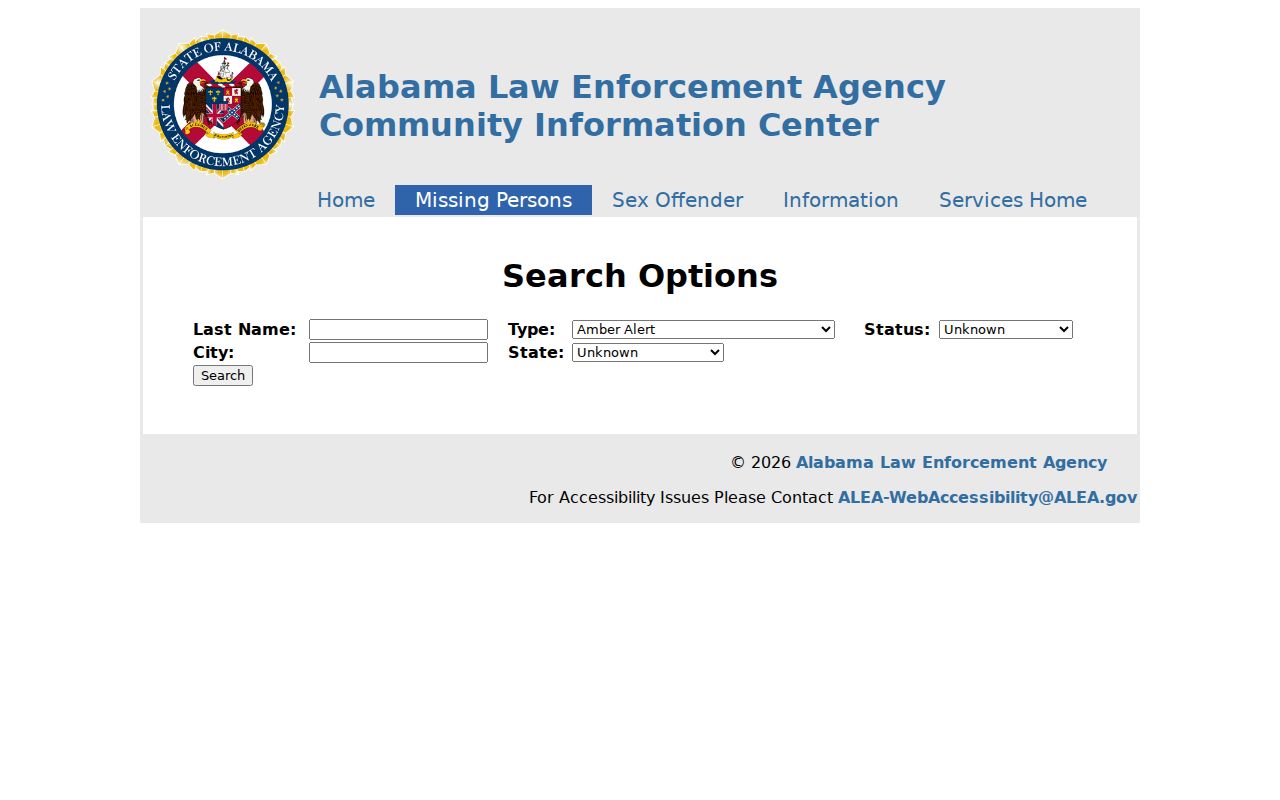
The official registry image illustrates a narrow modern public roll, not a general directory. Its published address data must never be used to approach, injure, or harass anyone.
Auburn Records Request Fallback
The City of Auburn request form is the fallback for council files, older permits, licenses, inspection records, and city datasets not published through the open-data hub. It asks for requester contact details, a description of the documents, a reason, signature, and date. A focused request should name the department, record type, address or case number, and a narrow date range. The form states no fixed response deadline or per-page price, so neither should be assumed.
Review the City of Auburn request route before sending a request.
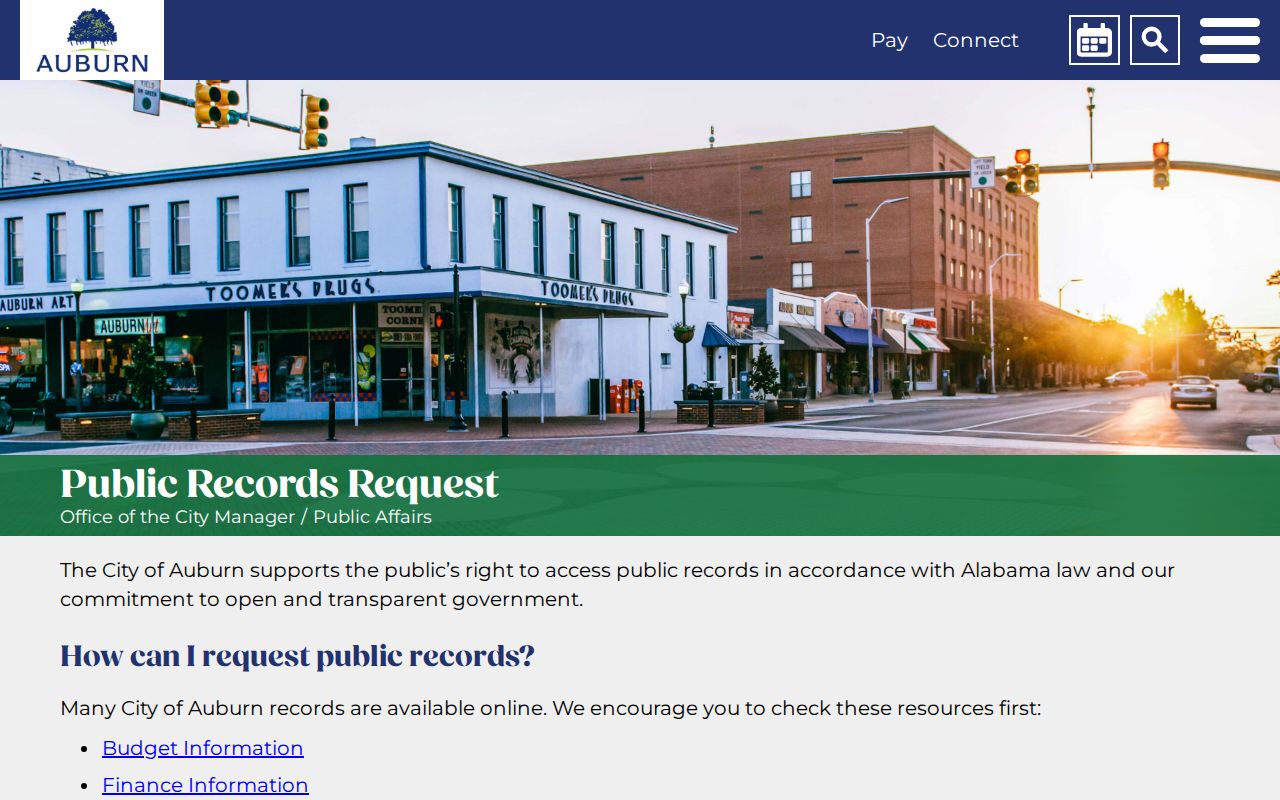
Requests may be emailed to recordrequest@auburnalabama.org, mailed to Auburn City Hall, or delivered in person. Staff may require inspection before copying, records cannot be removed during inspection, and fees may apply.
One final source check prevents wasted work: independently verify a demand, invoice, warrant, or record notice with the custodian's published number. Alabama Treasury unclaimed-property claims are free, the Secretary of State says it does not mail UCC invoices, and courts do not settle surprise jury claims through urgent payment calls.